
POSTMASTERSROMA, ROME
QUESTO CAOS DEL TEMPO – SOPHIE KO / MÁRTA KUCSORA
CURATED BY MELANIA ROSSI + PAULINA BEBECKA
March 10 – April 21, 2023
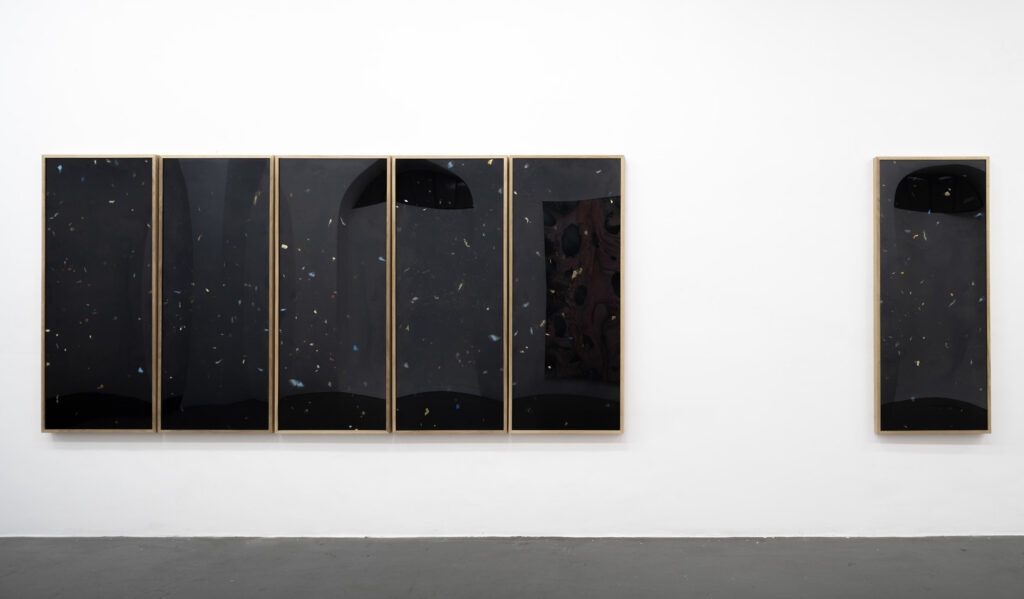
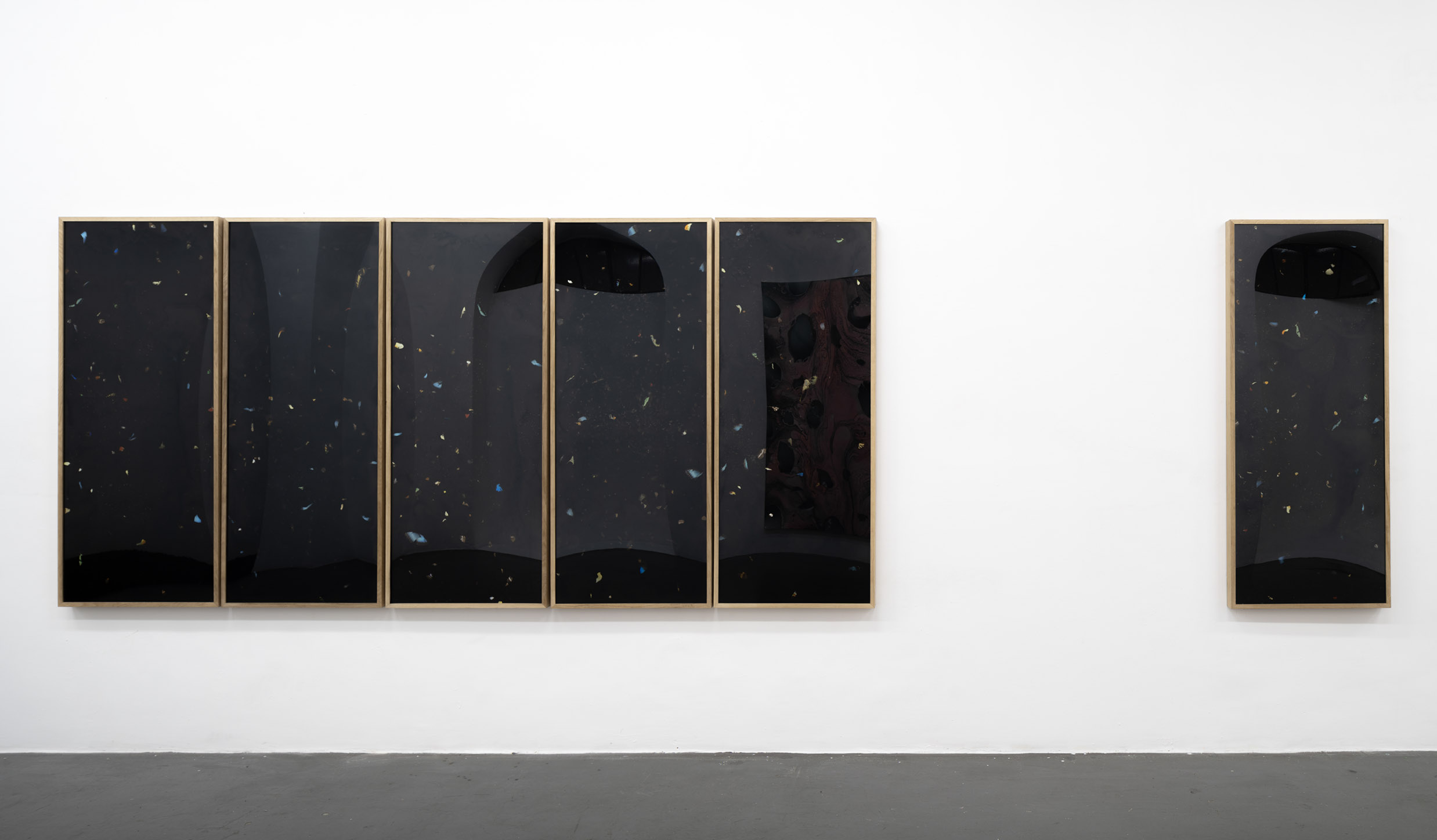
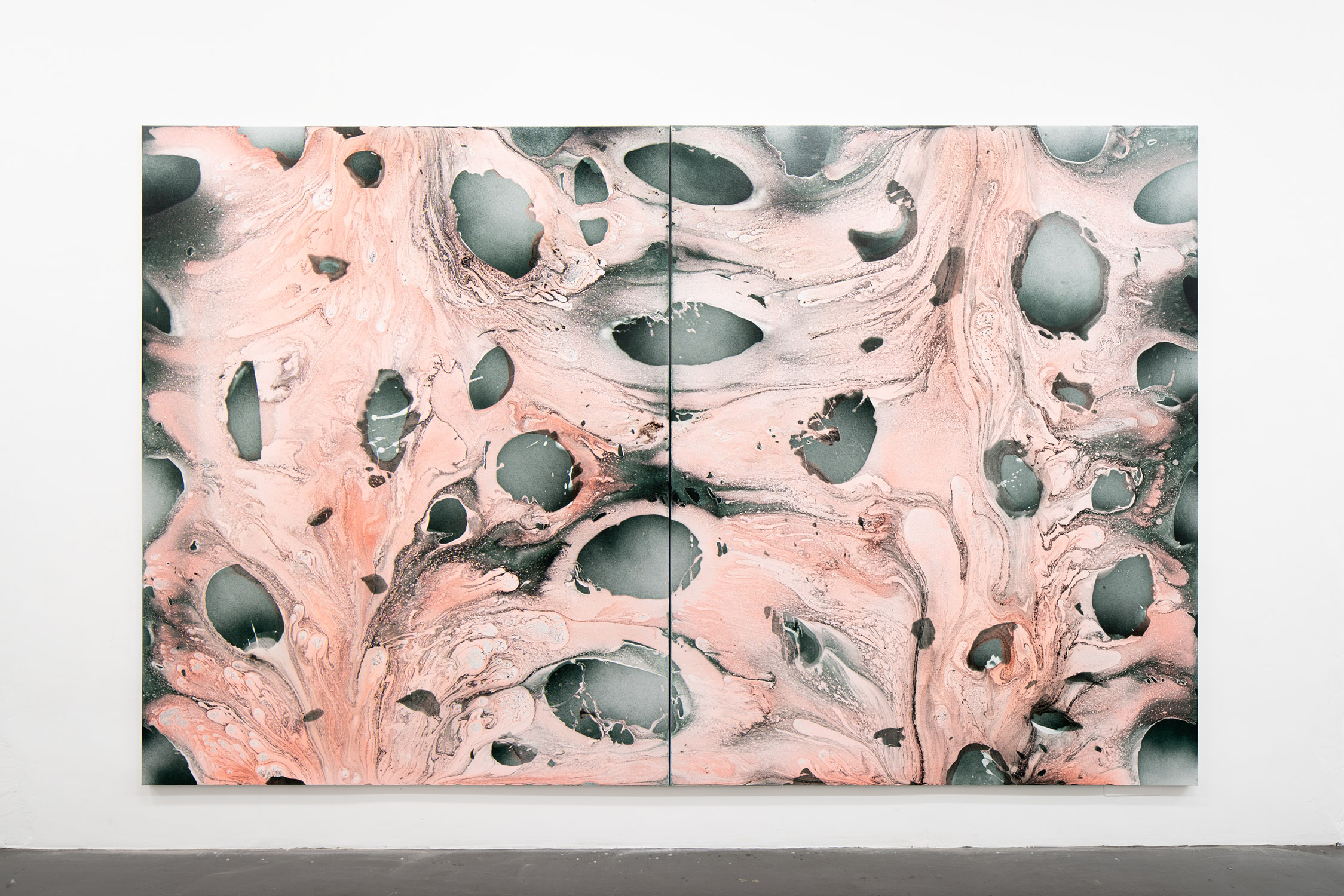
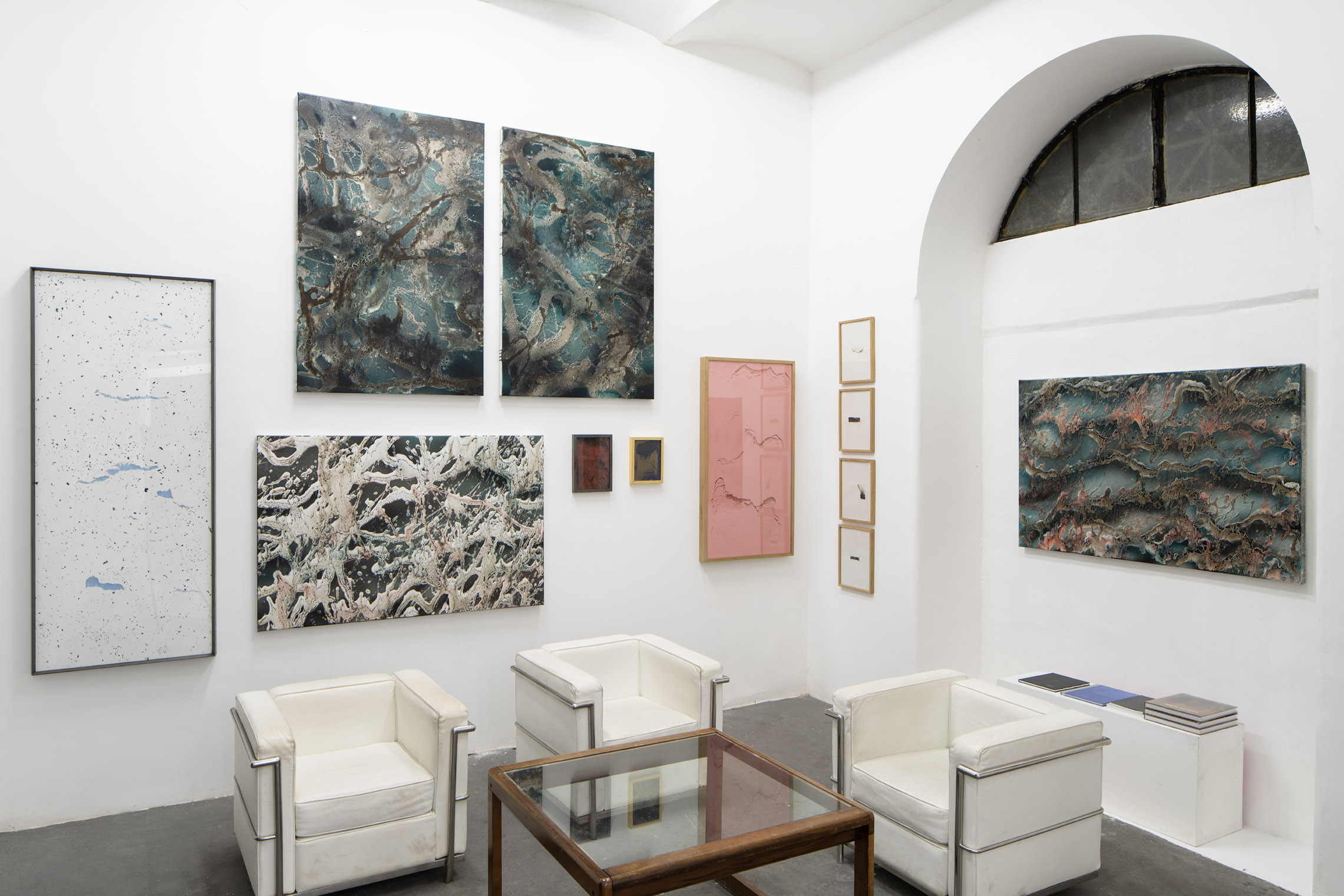
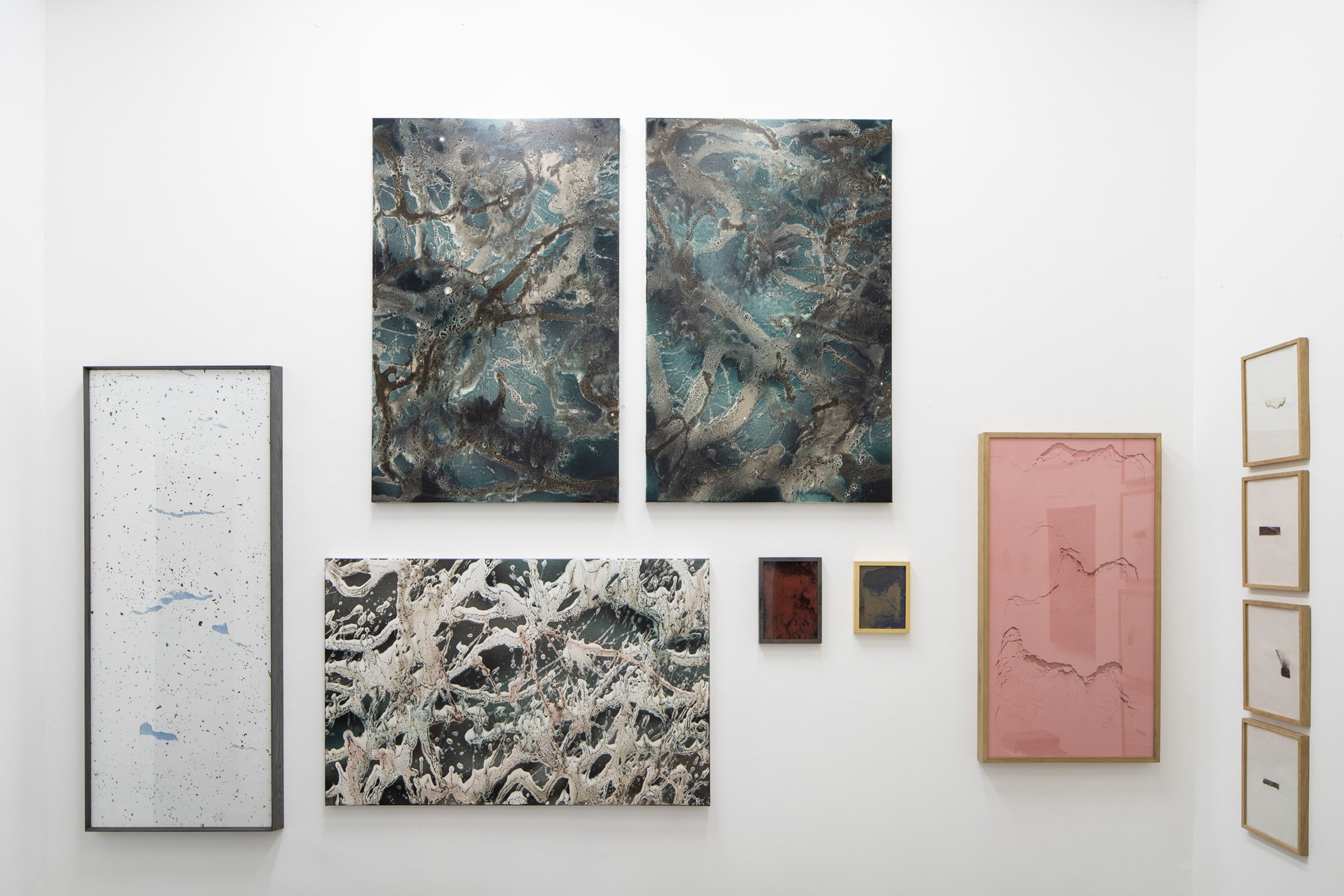
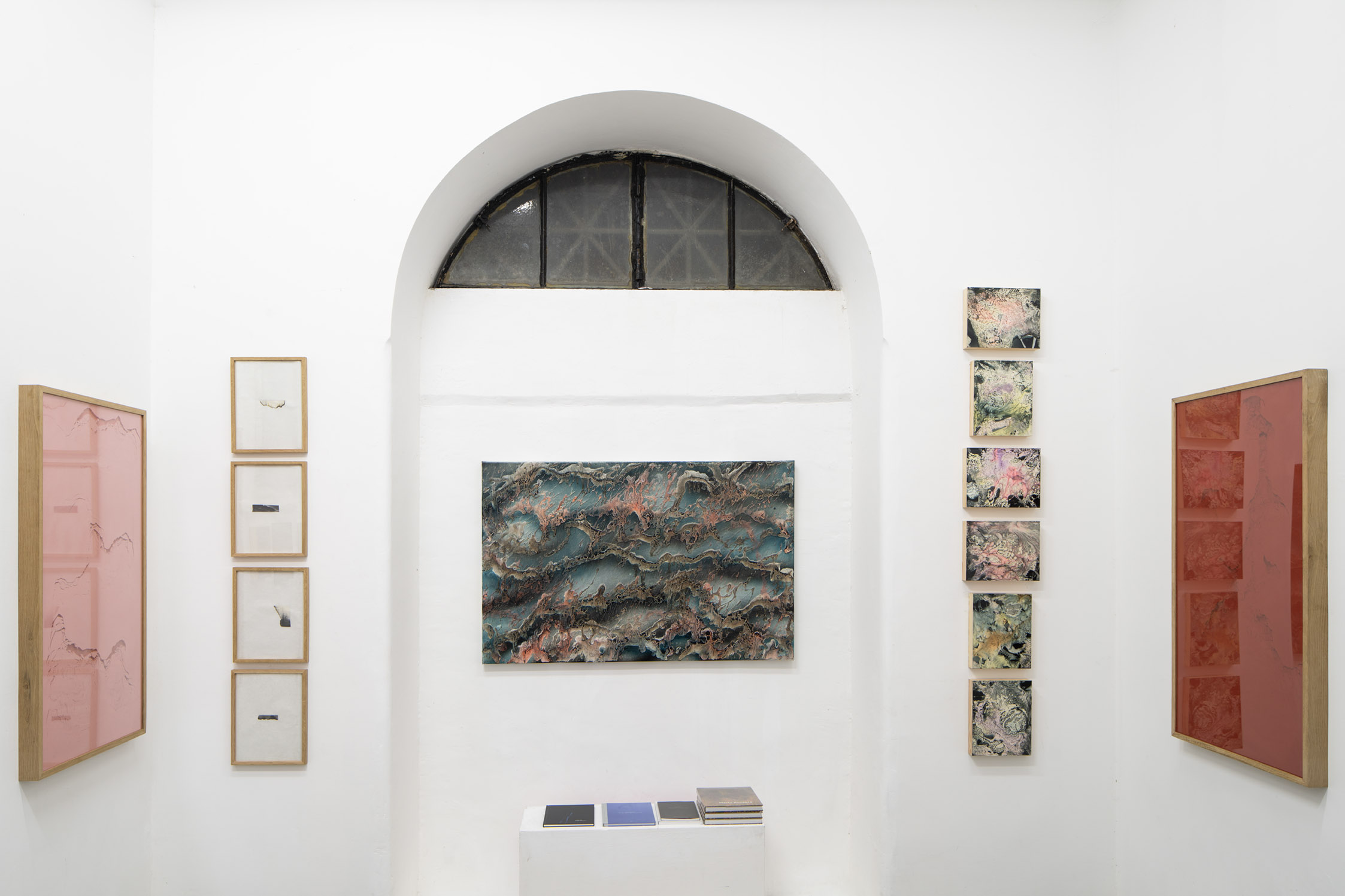
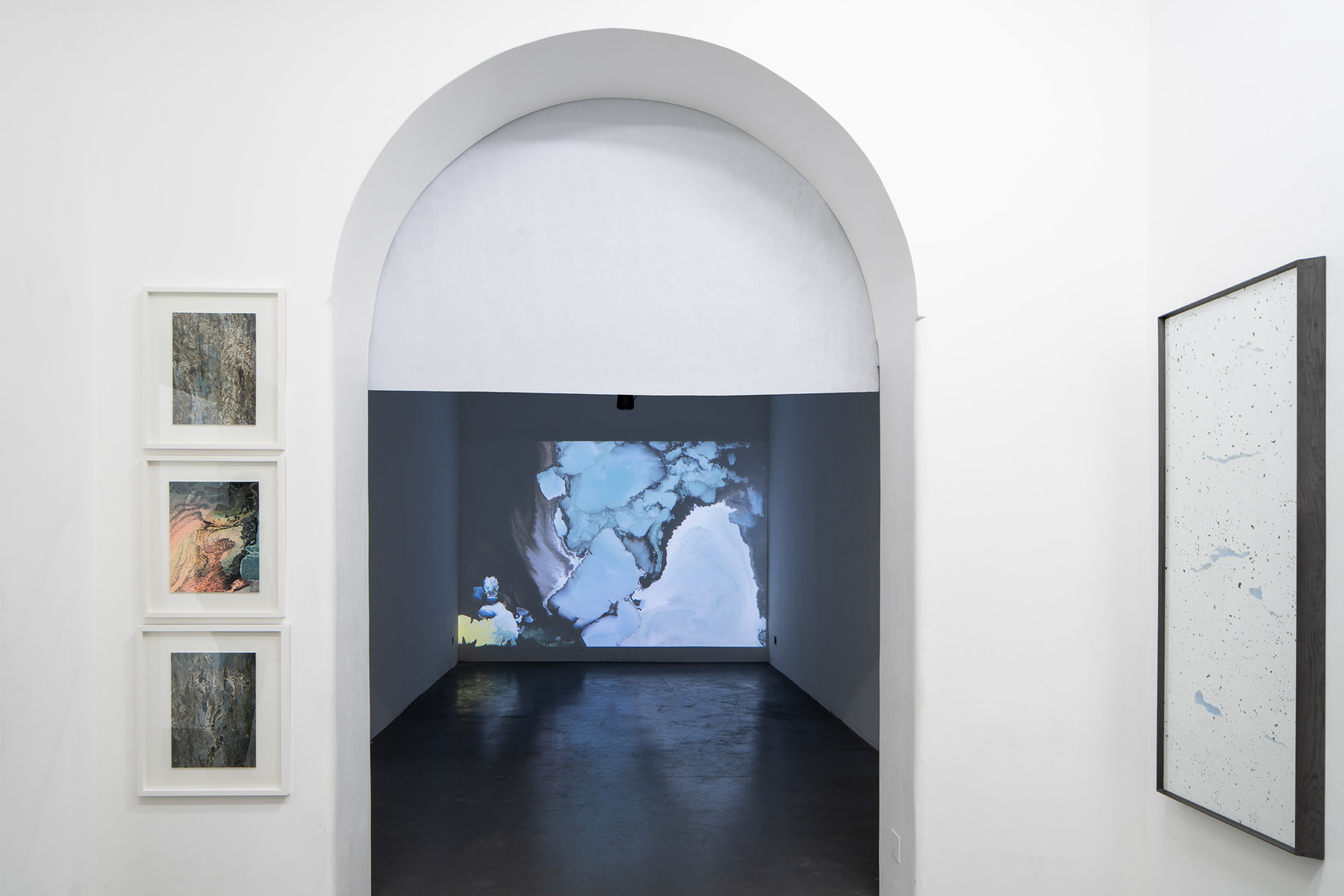
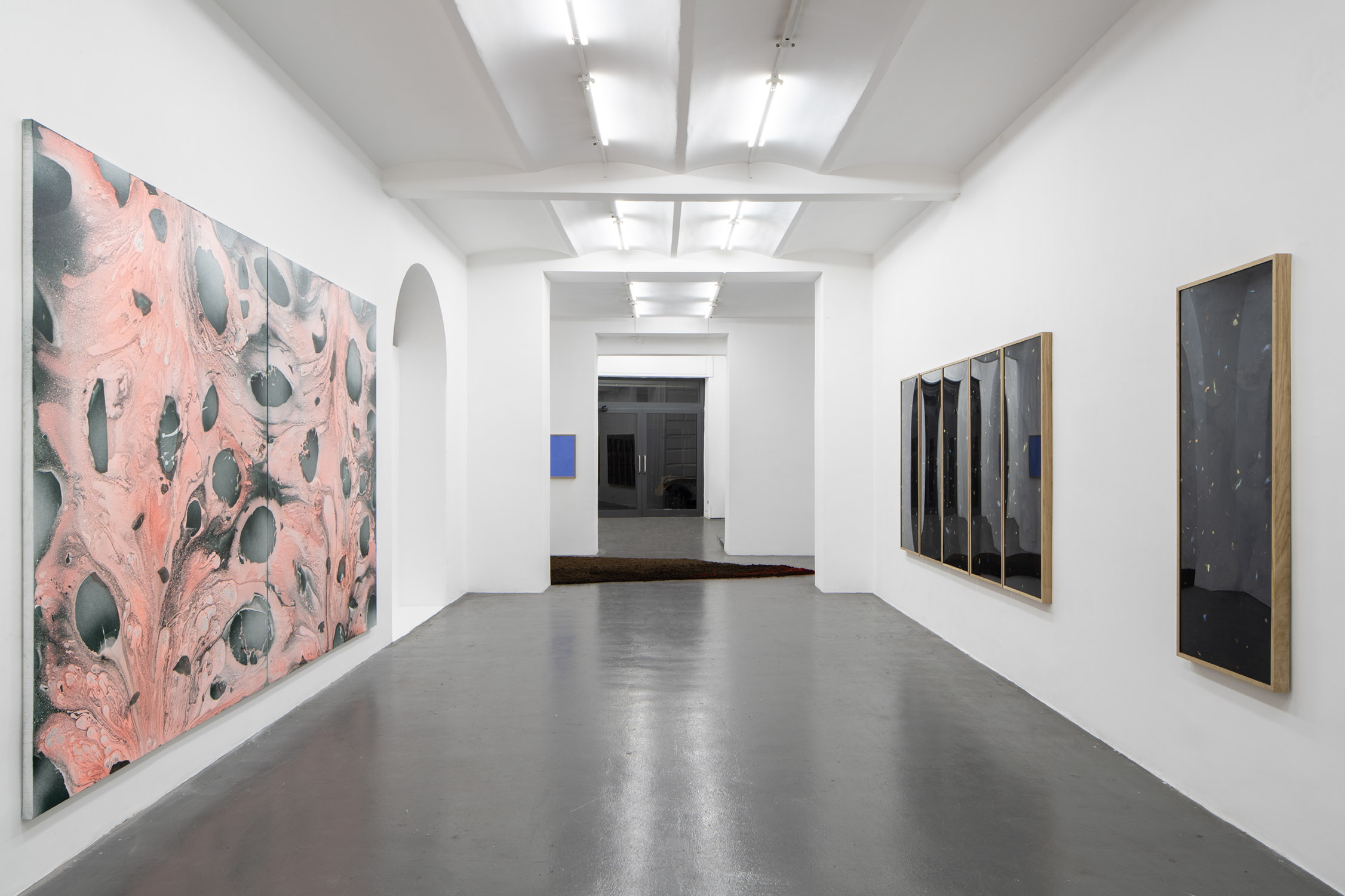
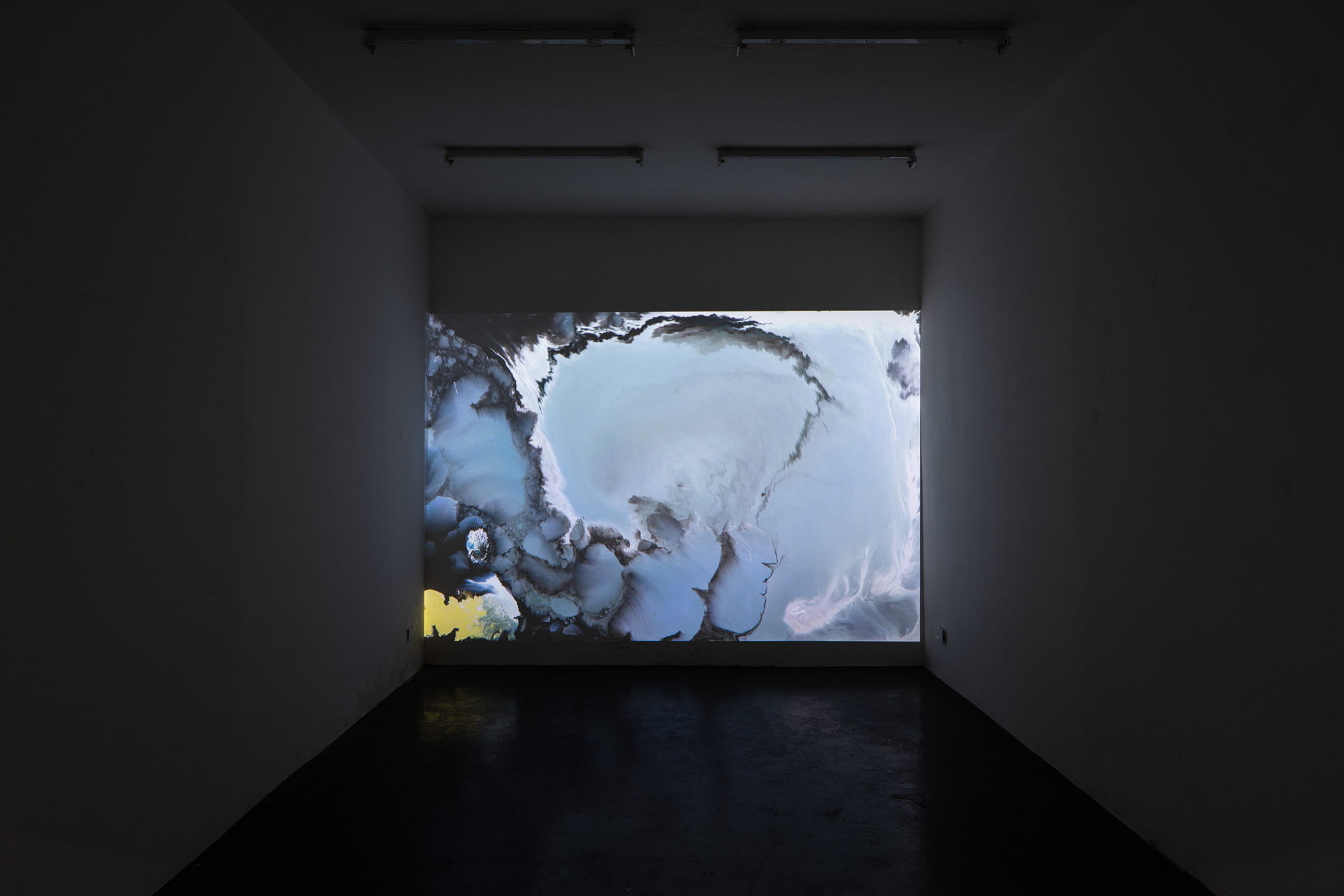
Questo Caos Del Tempo brings together the work of Sophie Ko and Márta Kucsora in a dialogue centered on time—not as a linear sequence, but as a physical force capable of generating, transforming, eroding, and reorganizing matter.
Across painting, installation, and moving image, the exhibition explores a territory in which order and disorder continuously exchange roles. Forms emerge, dissolve, accumulate, collapse, and reappear. Materials behave according to their own internal logic, introducing gravity, instability, chance, and duration into the making of the work. Rather than attempting to arrest time, Ko and Kucsora allow it to become an active participant in their respective practices.
The title, Questo Caos Del Tempo—This Chaos of Time—suggests a world that cannot be understood as fixed or permanent. Time is presented instead as a state of perpetual transformation: a process through which matter is constantly reorganized and through which every apparent equilibrium already contains the possibility of its dissolution.
Although Sophie Ko and Márta Kucsora arrive at this territory through distinctly different artistic languages, their practices converge around a fundamental question: what happens when the artist relinquishes absolute control and allows matter, physical forces, and time itself to participate in the creation of form?
Matter as Time
In Sophie Ko’s work, material carries memory.
Her practice has long investigated the relationship between image, matter, gravity, and disappearance. Pigment—traditionally understood as the substance through which an image becomes visible—is released from its conventional function and treated instead as unstable physical matter. It accumulates, shifts, falls, compresses, and changes.
The image is therefore never entirely static.
Gravity becomes an invisible collaborator, gradually altering the distribution of material and introducing duration directly into the work. What initially appears composed may slowly move toward fragmentation; what appears solid contains the possibility of collapse.
Ko’s works inhabit this tension between permanence and disappearance. They evoke geological formations, ruins, sedimentation, dust, and cosmic matter while simultaneously referring to the history of painting itself. Pigment becomes both the origin of the image and the substance of its potential dissolution.
For Questo Caos Del Tempo, Ko extends this investigation into the architecture of the exhibition space through a site-specific floor installation. The work transforms the gallery into a field in which material, gravity, movement, and time intersect. The visitor does not simply encounter an autonomous object but enters a spatial condition governed by instability and transformation.
Here, entropy is not understood purely as destruction. It becomes productive—a mechanism through which one state of matter gives rise to another.
Painting as a Living System
Márta Kucsora approaches similar questions through the expanded possibilities of abstract painting.
Her large-scale works emerge from a process in which physical action and material behavior are deliberately placed into tension. Kucsora works with paints, pastes, varnishes, liquid and gelatinous substances of radically different densities and viscosities. These materials are poured, sprayed, sprinkled, layered, dispersed, and propelled across the surface.
Rather than constructing an image according to a predetermined composition, she establishes the conditions within which an image can emerge.
Different substances collide, repel one another, merge, separate, expand, contract, or form membranes and cellular structures. Gravity pulls material across the surface while viscosity slows or redirects its movement. Chemical and physical reactions generate structures that could not be fully designed in advance.
The artist initiates the process but does not entirely dictate its outcome.
This controlled surrender is fundamental to Kucsora’s practice. Her paintings develop through a continuous negotiation between intention and accident, action and reaction, control and autonomy. The studio becomes a laboratory in which painting behaves almost like a living system.
The resulting works suggest an infinite psychological and physical space in which rhythm and order exist within apparent chaos.
From a distance, the paintings may resemble vast landscapes, atmospheric formations, microscopic organisms, turbulent bodies of water, or images of deep space. At closer range, these associations dissolve into the physical reality of paint: layers, currents, droplets, fractures, membranes, traces of movement.
The scale itself becomes unstable.
What appears microscopic can simultaneously appear cosmic. A cellular structure becomes a galaxy; a liquid collision resembles a geological event; a detail occupying only a few centimeters of canvas seems to contain an entire landscape.
Kucsora’s abstraction therefore operates between different orders of nature. Her paintings do not represent specific natural phenomena. Instead, they echo the processes through which natural structures themselves emerge: flow, turbulence, growth, erosion, accumulation, collision, repetition, and self-organization.
Engineered Serendipity
Chance plays an essential role in this process, but Kucsora’s work is not simply accidental.
Her paintings arise from what might be described as engineered serendipity: carefully constructed situations in which unpredictable events are allowed to occur.
Years of experimentation with materials enable the artist to anticipate certain behaviors—how one substance may react to another, how viscosity influences movement, how gravity redirects a flow—but the final configuration remains impossible to determine completely.
The work therefore exists in a productive space between knowledge and uncertainty.
This relationship transforms painting from the execution of an image into the orchestration of an event.
Kucsora does not simply apply paint to a surface; she activates a system. Once initiated, that system begins to generate its own internal structures. The artist responds to these developments in real time, sometimes intervening, sometimes redirecting, sometimes allowing the process to continue independently.
Creation becomes observation as much as action.
The painting records this sequence of events. Every current, rupture, accumulation, and collision remains embedded in the final surface as evidence of something that has happened.
In this sense, the paintings are not only spatial objects. They are records of duration.
The Image in Motion
Kucsora’s video installation expands this investigation beyond the fixed surface of painting.
Processes that are compressed into the finished canvas unfold through actual duration in moving image. Liquid matter moves, structures mutate, boundaries disappear, and new configurations continuously emerge.
The distinction between painting and film begins to dissolve.
What appears as abstraction is simultaneously a physical event.
The video reveals a central principle within Kucsora’s practice: form is never truly static. Every structure is temporary, the visible result of forces that existed before it and will continue after it.
Painting becomes one moment within a much larger continuum.
Two Practices, One Temporal Field
The encounter between Sophie Ko and Márta Kucsora is therefore not based on visual similarity. Their works remain unmistakably distinct.
What connects them is a shared understanding of matter as something fundamentally unstable.
For Ko, time manifests through gravity, sedimentation, fragmentation, and the possibility of disappearance. Matter carries the memory of images while simultaneously moving toward their dissolution.
For Kucsora, time manifests through flow, collision, chemical interaction, and self-organizing structures. Matter generates images through movement.
One practice often appears to move toward decomposition; the other toward emergence.
Yet these directions are inseparable.
Every act of formation already contains transformation. Every collapse produces another configuration. Creation and destruction are not opposites but different moments within the same continuous process.
This cyclical understanding of matter gives Questo Caos Del Tempo its conceptual center.
The exhibition proposes that chaos is not simply the absence of order. Within natural systems, chaos can generate complex structures. Turbulence creates patterns. Gravity produces formations. Erosion creates landscapes. Biological systems develop through continuous interaction between stability and mutation.
The works of Ko and Kucsora occupy precisely this threshold.
They reveal the moment at which control encounters unpredictability and form emerges from forces that cannot be completely mastered.
The Chaos of Time
Ultimately, Questo Caos Del Tempo asks us to reconsider the artwork not as a fixed object but as a temporary state within a much larger process.
Pigment falls.
Liquids spread.
Materials collide.
Structures emerge and disappear.
Gravity acts continuously.
Time transforms everything.
What we encounter in the gallery is therefore not an endpoint. Each work represents a moment of temporary equilibrium—a pause within an ongoing transformation.
Through two radically individual practices, Sophie Ko and Márta Kucsora invite us to contemplate a world in which permanence may be an illusion and instability is not necessarily something to resist.
Instead, instability becomes generative.
Between the microscopic and the cosmic, between construction and collapse, between intention and chance, Questo Caos Del Tempo reveals matter as something alive with possibility.
The exhibition does not attempt to impose order upon chaos.
It asks us to look more closely and recognize that order may already exist within chaos—and that chaos itself may be one of the fundamental forces through which new forms come into being.