
THE YUNNAN PROVINCIAL MUSEUM (云南省博物馆), KUNMING, CHINA
NATURE, IMMORTALITY AND THE COSMOS
February 12 – May 10, 2026
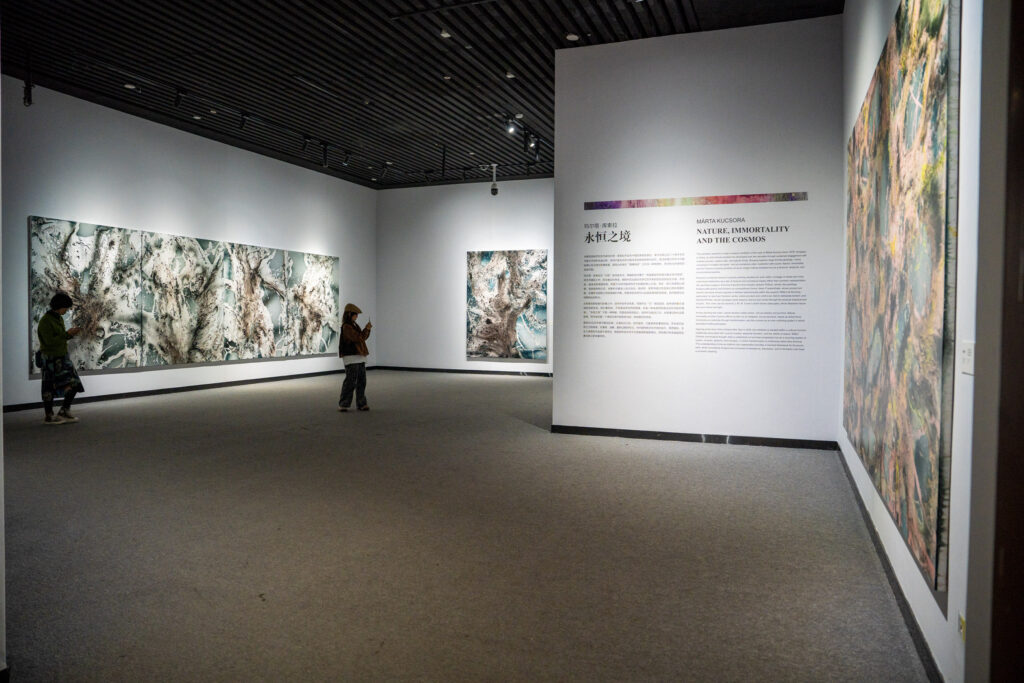
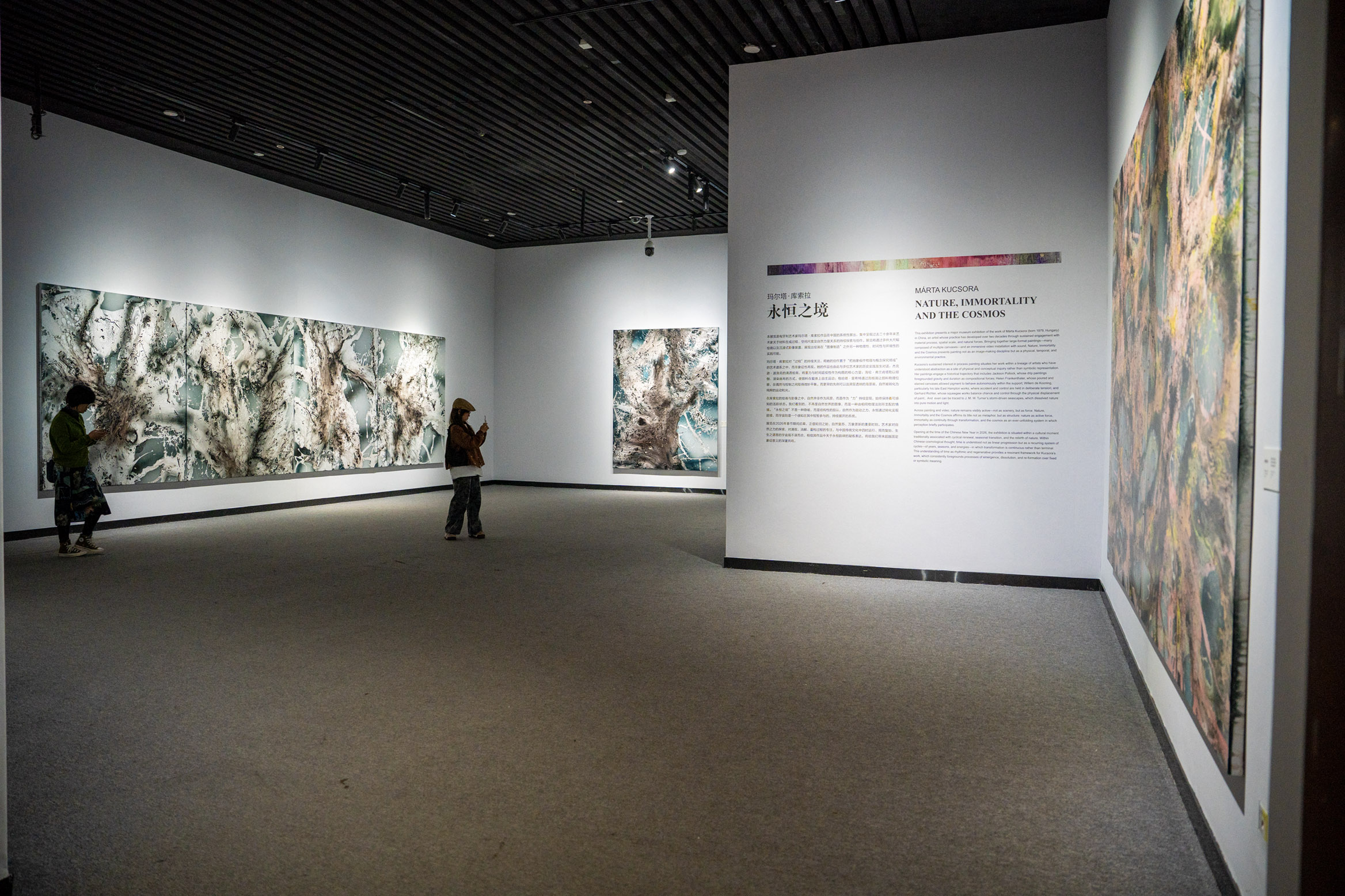
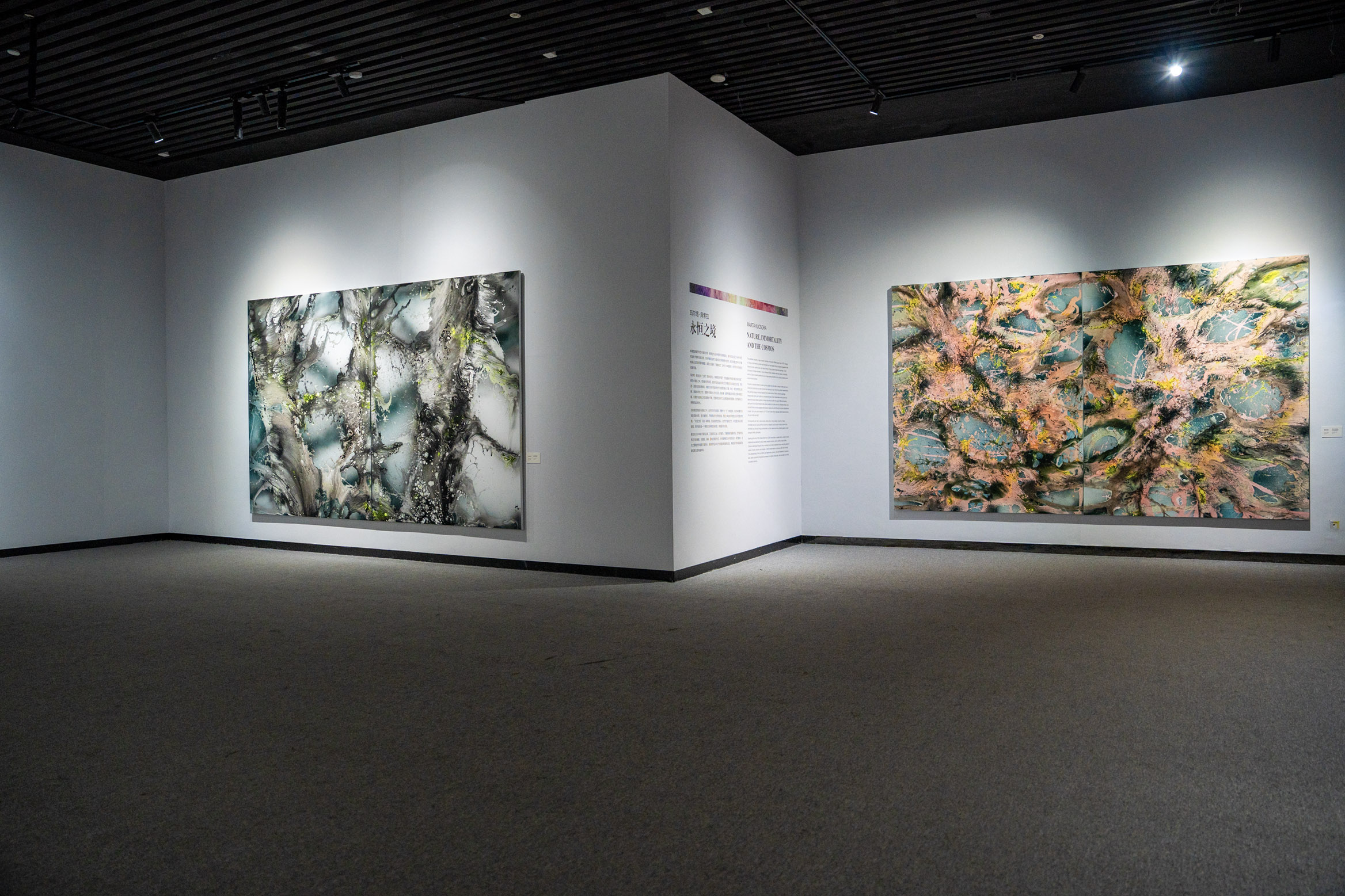
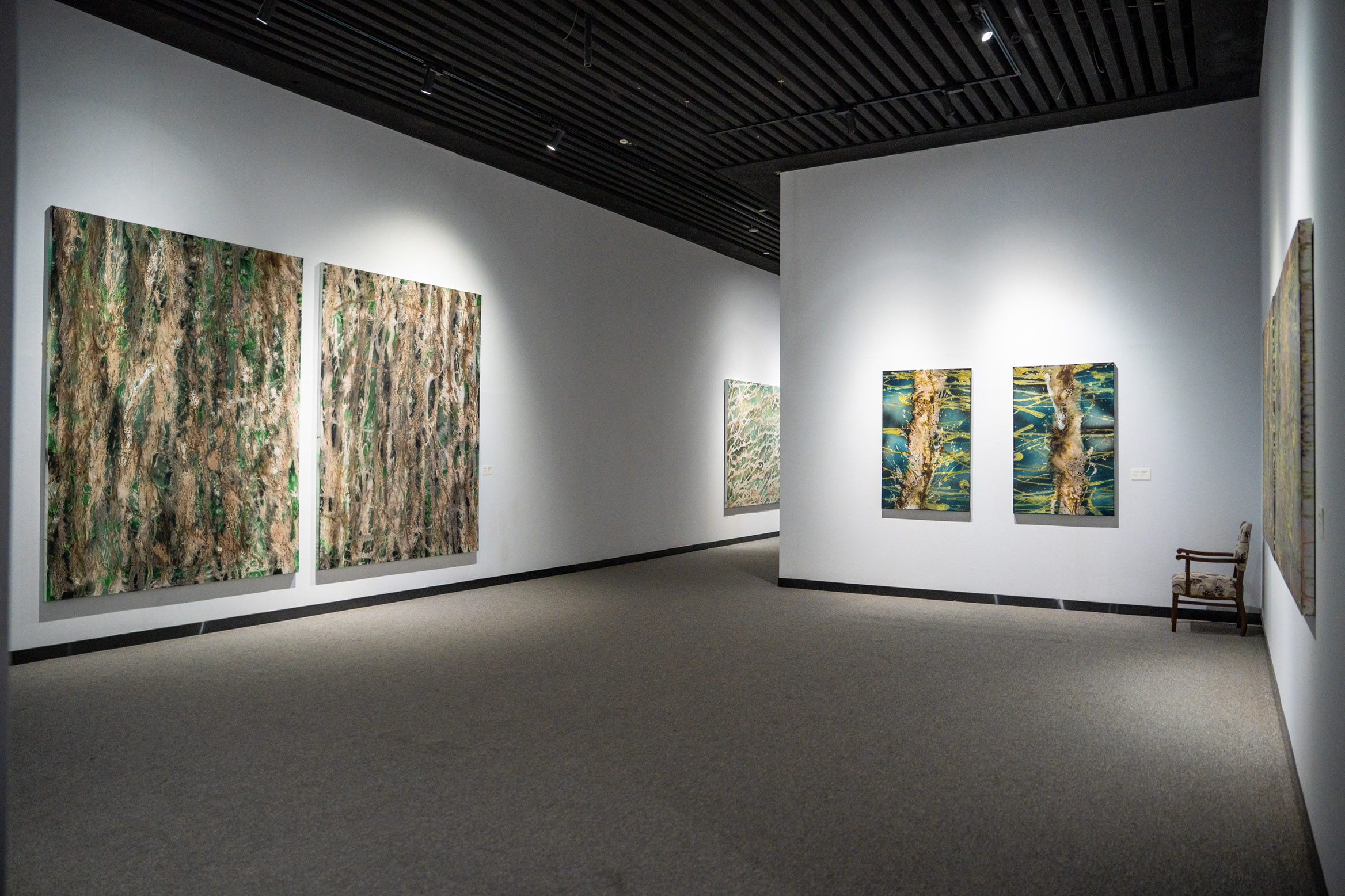
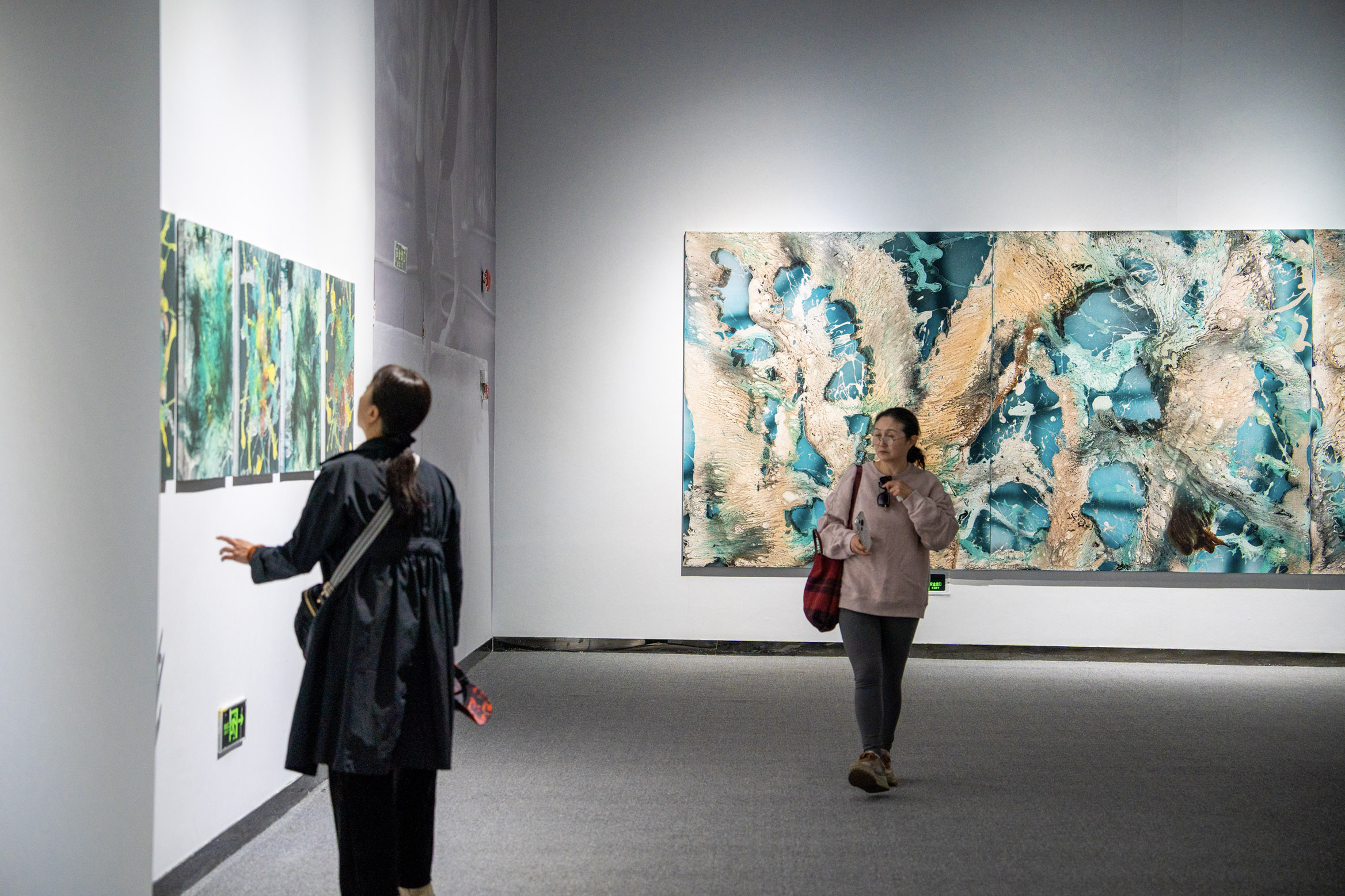
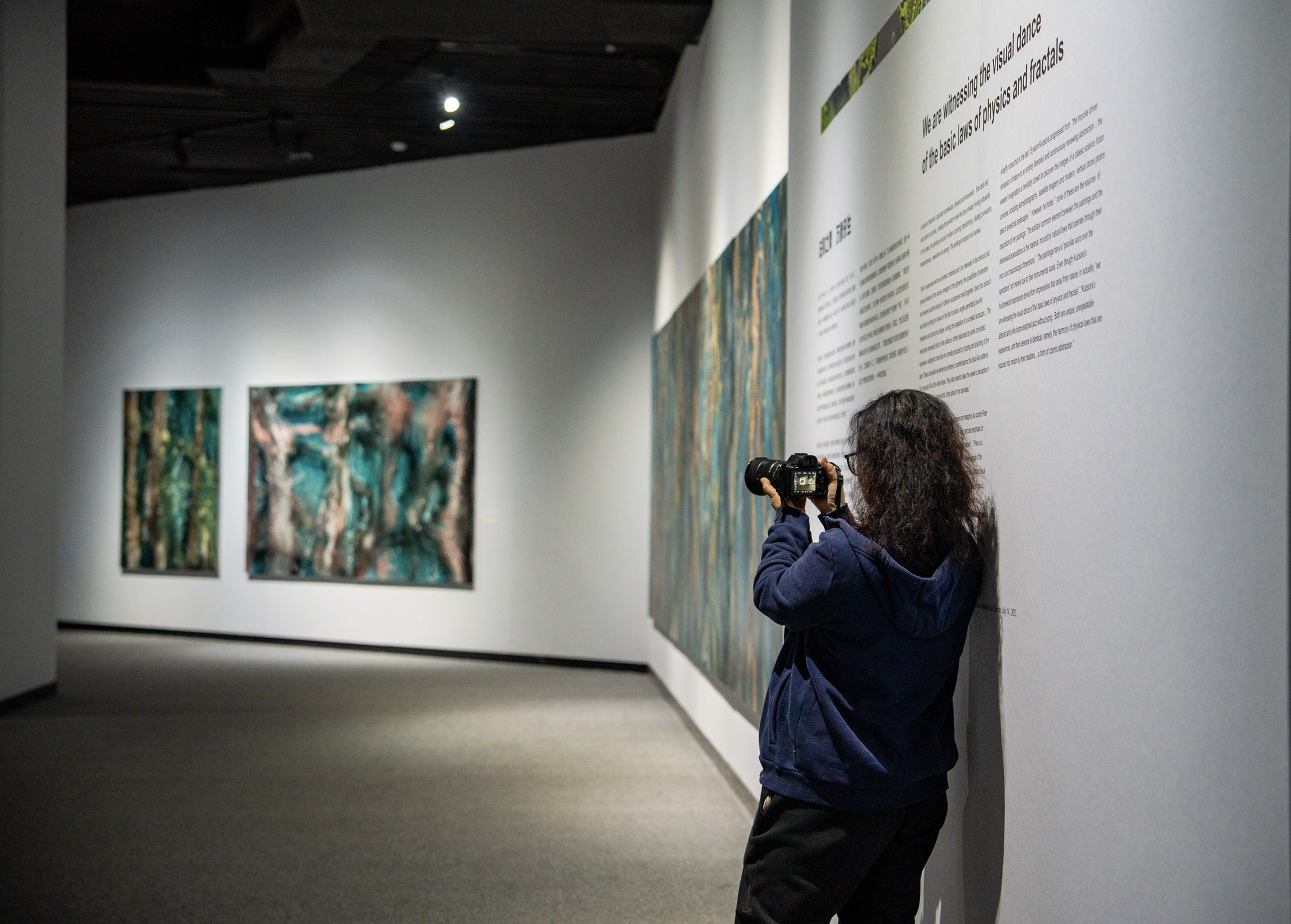
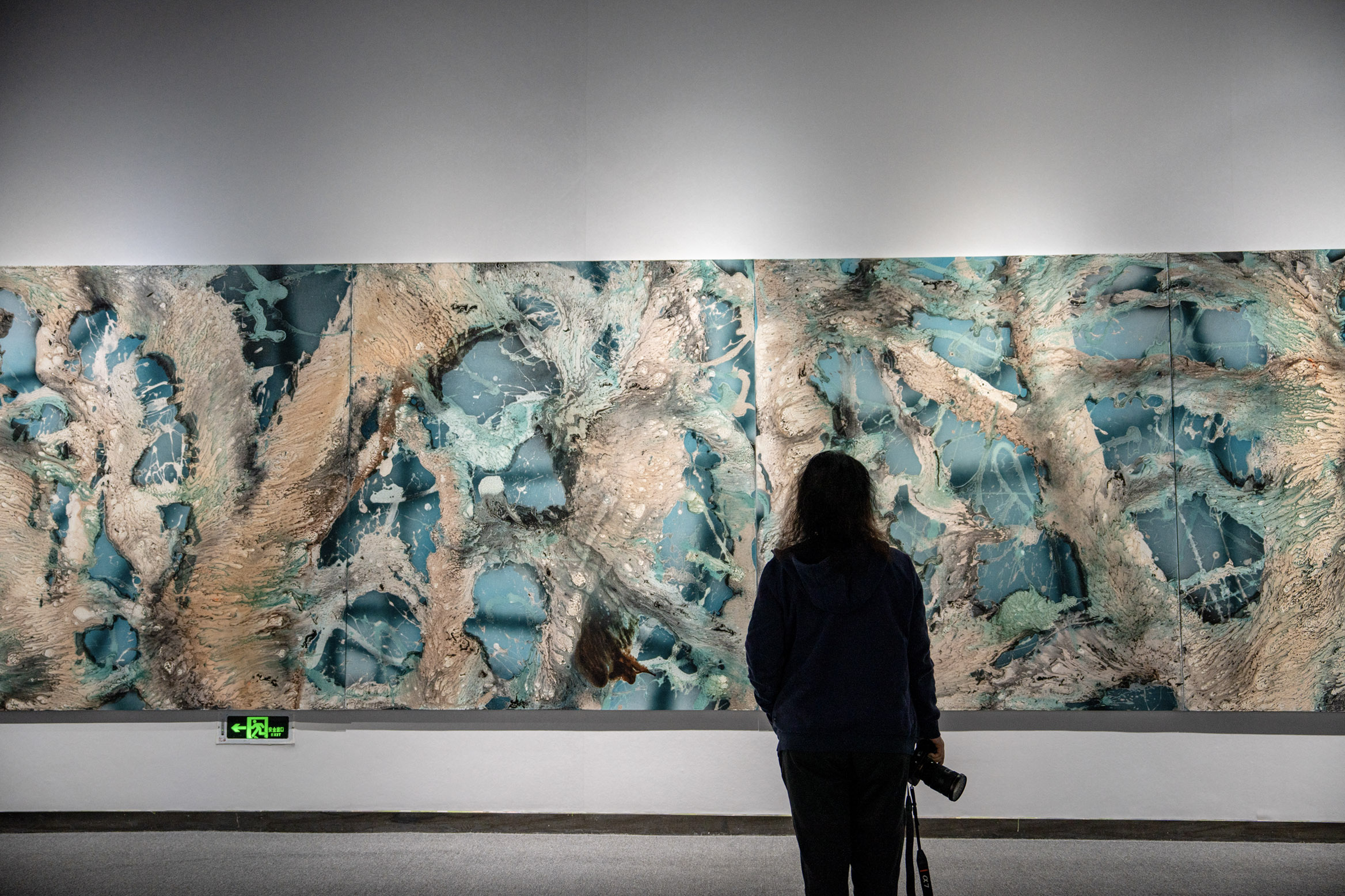
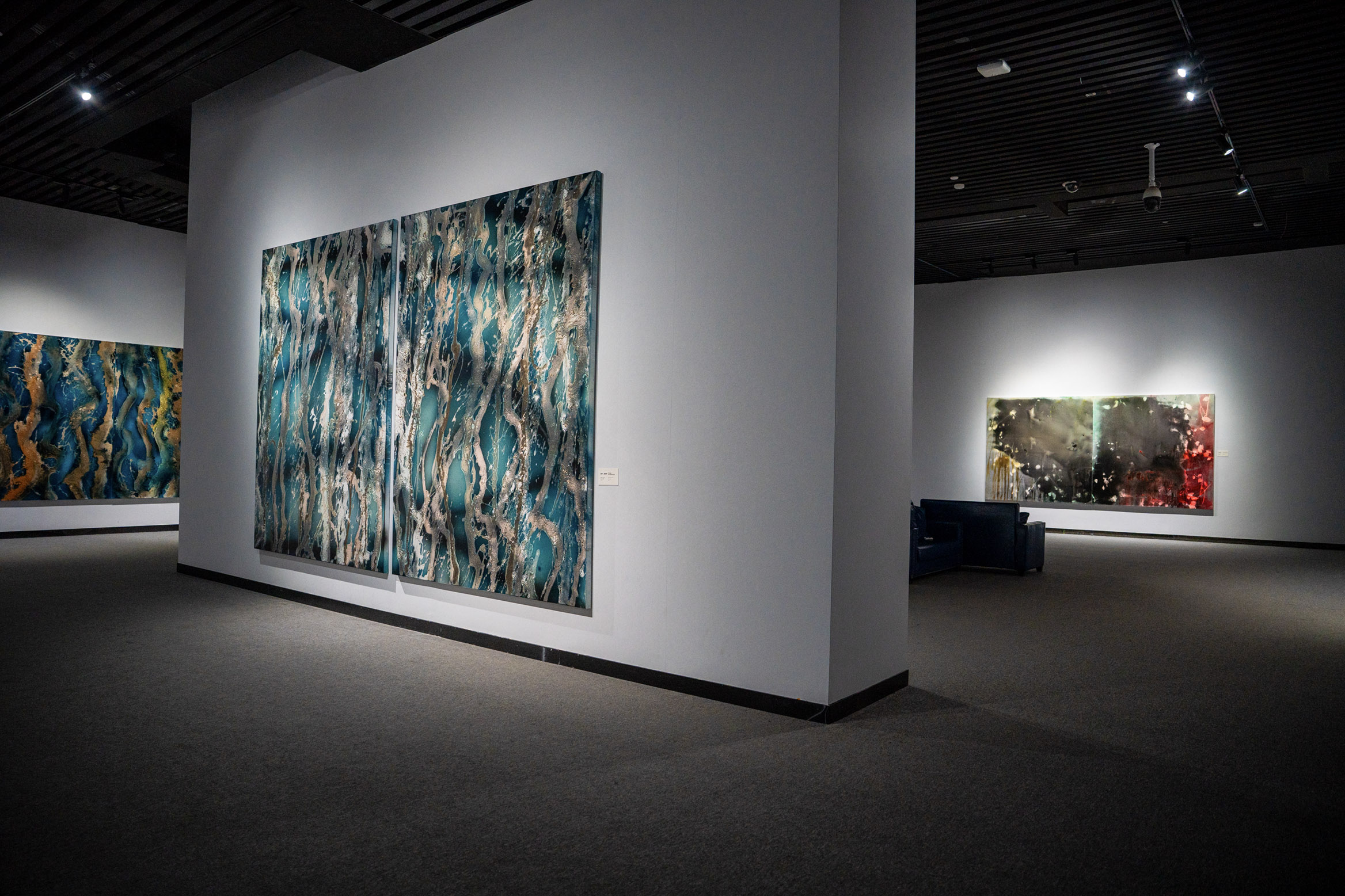
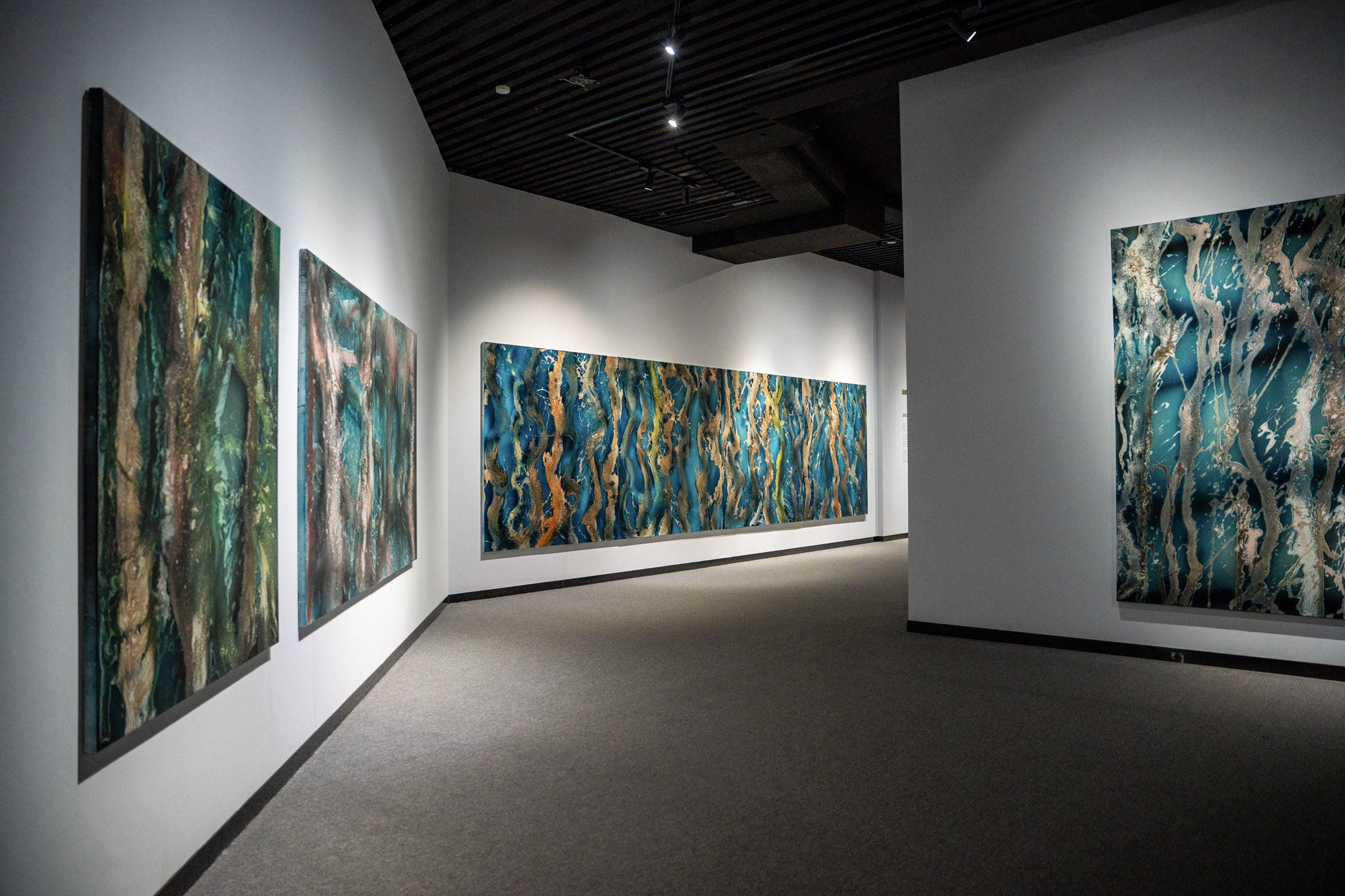
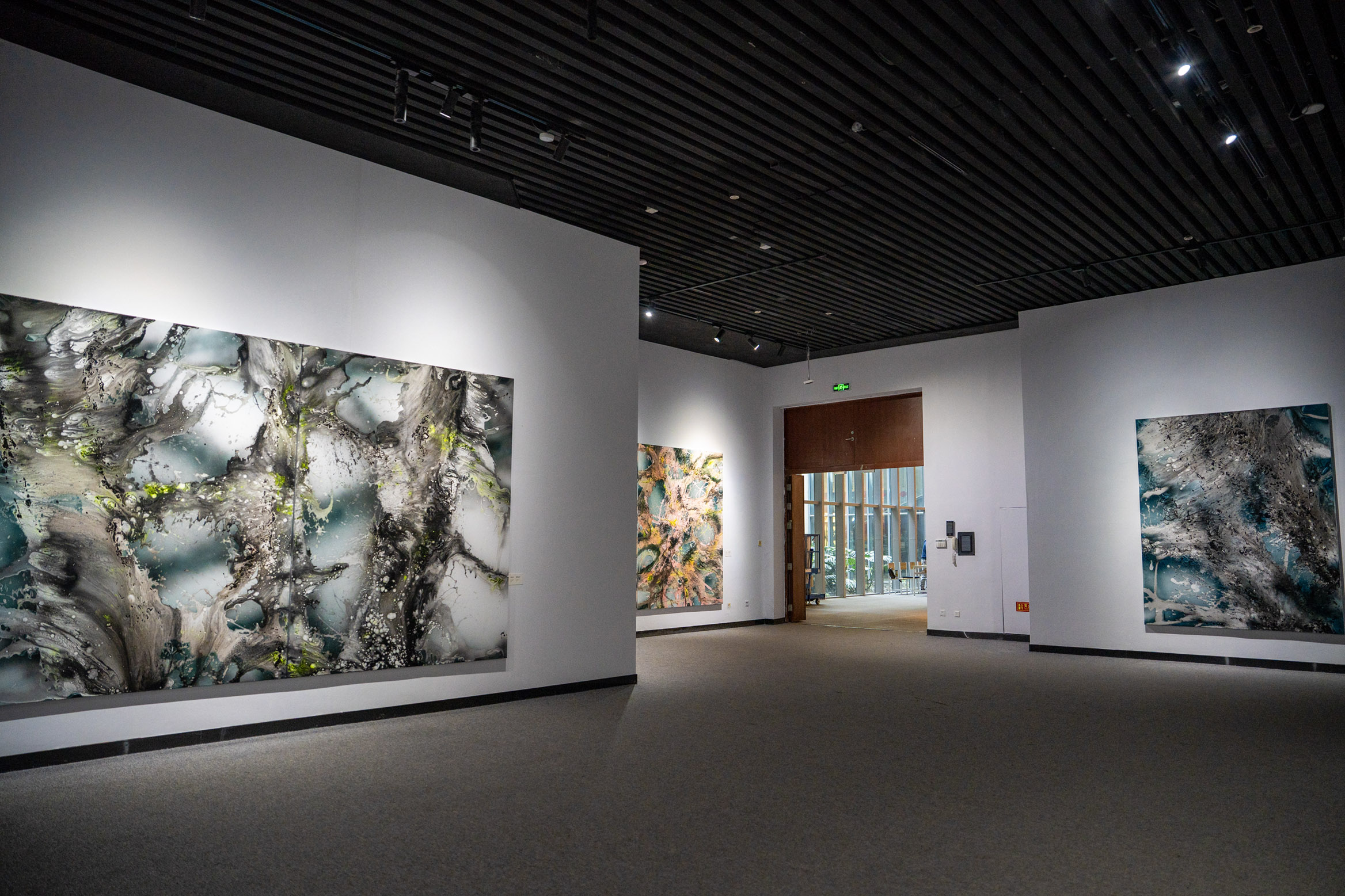
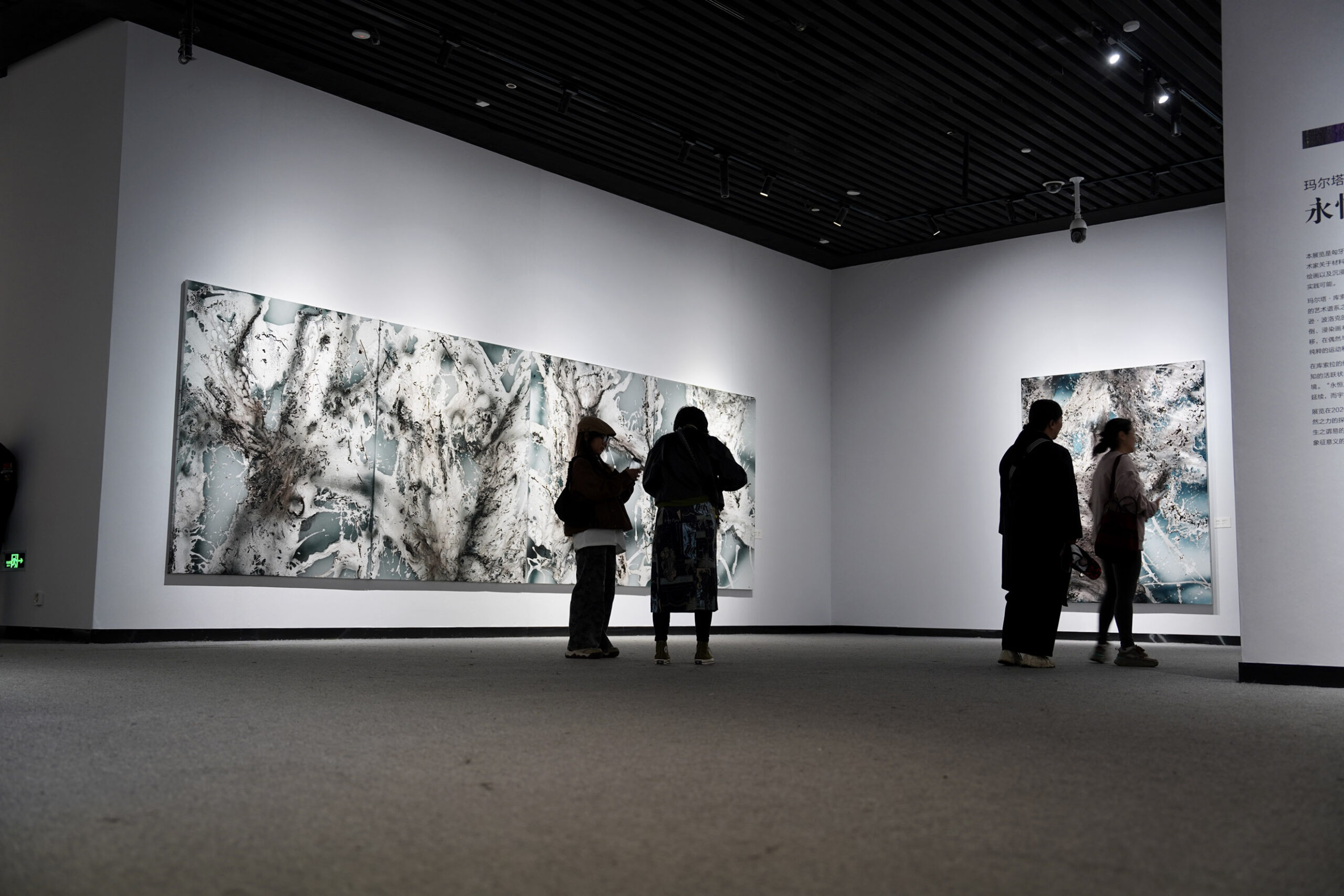
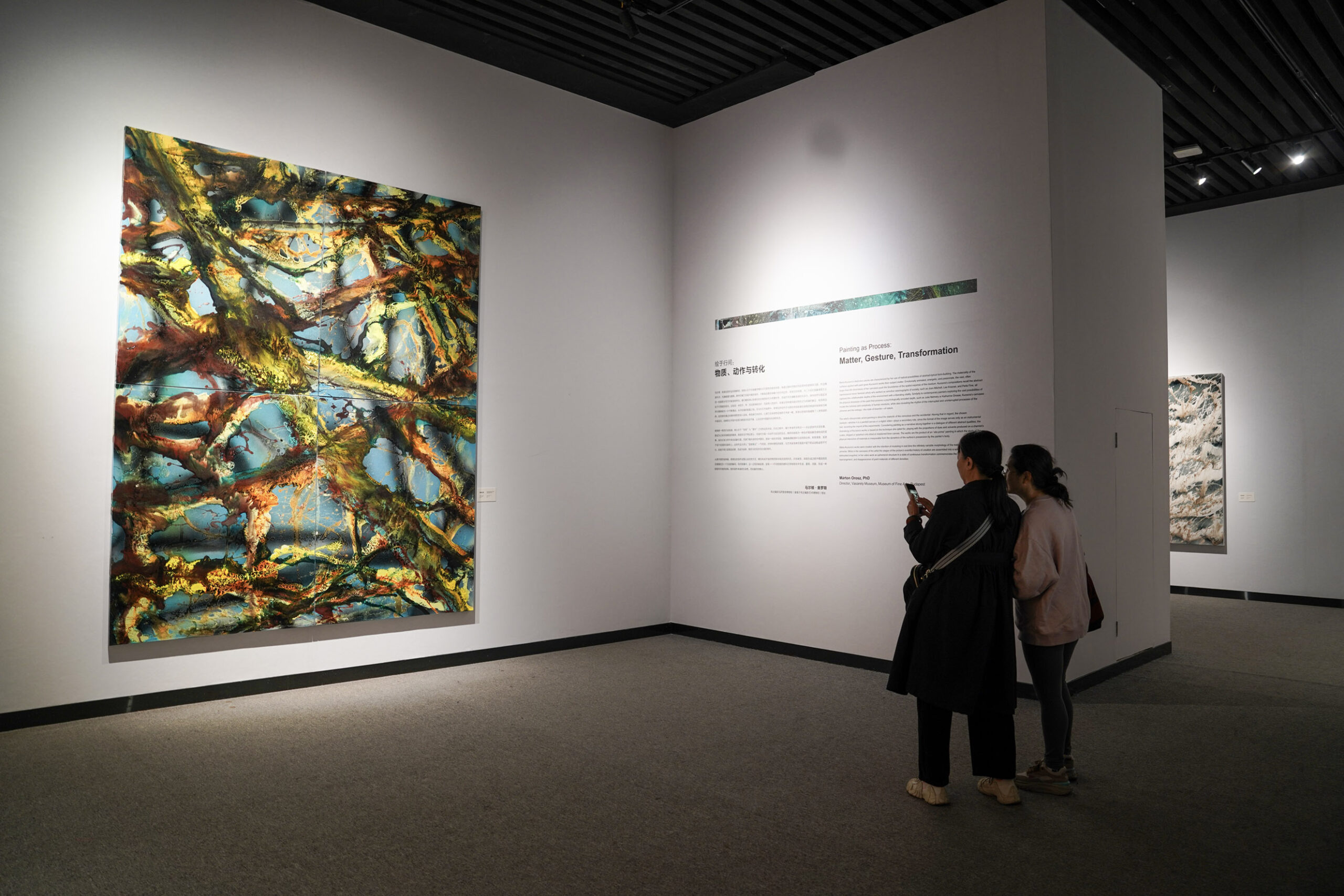
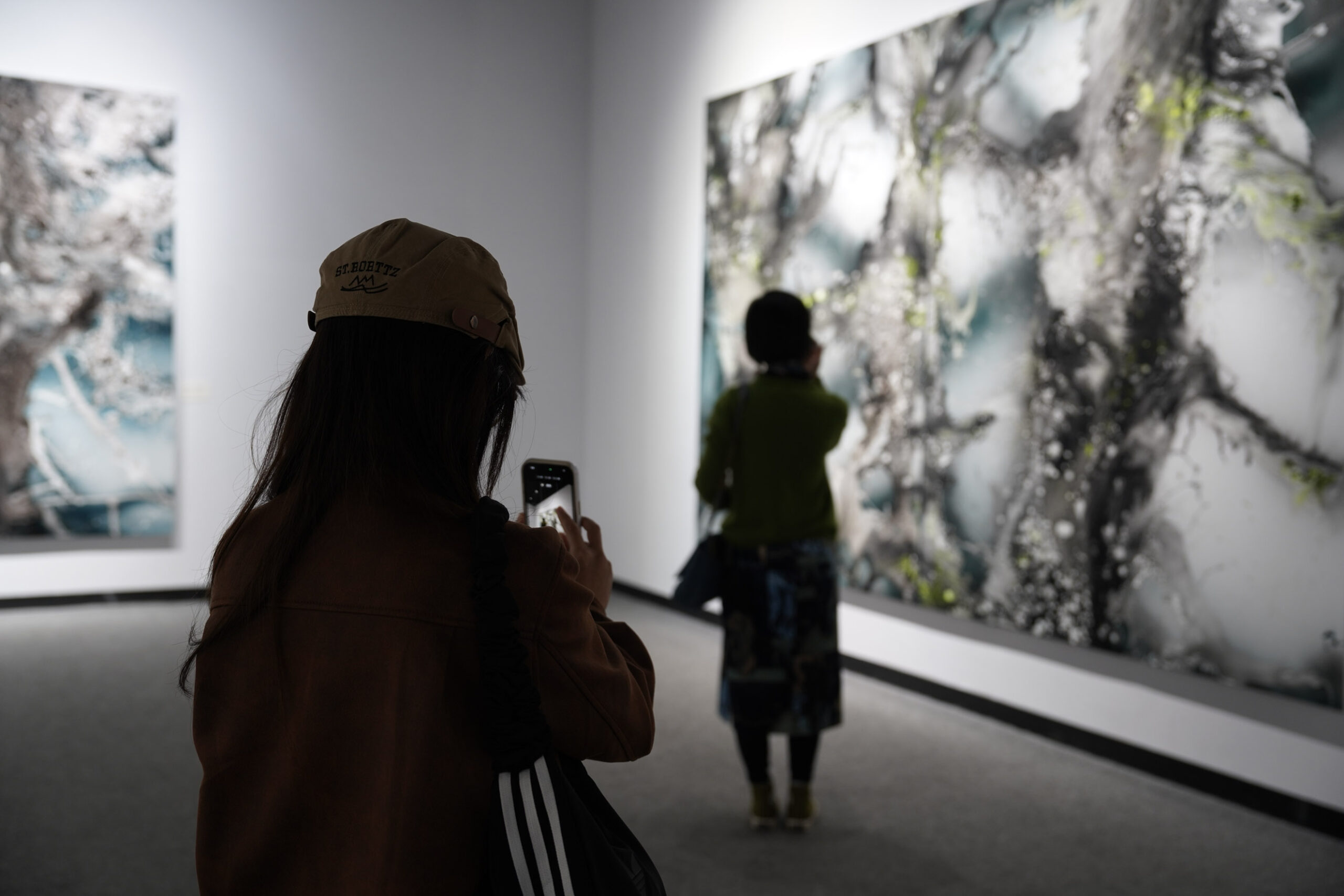
This exhibition presents a major museum exhibition of the work of Márta Kucsora in China, an artist whose practice has developed over two decades through sustained engagement with material process, spatial scale, and natural forces. Bringing together large-format paintings—many composed of multiple canvases—and an immersive video installation with sound, Nature, Immortality and the Cosmos presents painting not as an image-making discipline but as a physical, temporal, and environmental practice.
Opening at the time of the Chinese New Year in 2026, the exhibition is situated within a cultural moment traditionally associated with cyclical renewal, seasonal transition, and the rebirth of nature. Within Chinese cosmological thought, time is understood not as linear progression but as a recurring system of cycles—of years, seasons, and energies—in which transformation is continuous rather than terminal. This understanding of time as rhythmic and regenerative provides a resonant framework for Kucsora’s work, which consistently foregrounds processes of emergence, dissolution, and re-formation over fixed or symbolic meaning.
From the outset, Kucsora’s painting has been driven by process rather than depiction. Paint is poured, spread, tilted, interrupted, and allowed to react chemically and physically over time. Gravity, viscosity, evaporation, and chance are not effects to be corrected but conditions to be worked with. What results are surfaces that register accumulation, erosion, and transformation—records of events rather than expressions of mood. In this sense, the paintings function as temporal condensations: moments in which ongoing material activity is momentarily held, without implying completion or finality.
Scale is central to Kucsora’s artistic practice. Many of the paintings presented here extend beyond a single canvas, forming modular compositions that unfold laterally across the wall. These multi-part works resist the logic of a unified image. Instead, they function as continuous fields punctuated by seams and intervals, where rhythm and density shift from panel to panel. The wall becomes a site of assembly, and the act of looking becomes a spatial experience unfolding over time, rather than a single, frontal encounter.
Alongside the paintings, a large-scale, 18-minute video installation extends Kucsora’s process into time-based form. Made from unaltered, real-time recordings of moving paint, Beautiful Error reveals material transformations that, in painting, are ultimately fixed. Sound is an integral component, shaping the viewer’s spatial awareness and reinforcing the sense of immersion. Beautiful Error operates as a parallel investigation into motion, instability, and the emergence of form, allowing duration itself to become a primary medium.
Kucsora’s sustained interest in process situates her work within a lineage of artists who have understood abstraction as a site of physical and conceptual inquiry rather than symbolic representation. Her paintings engage a historical trajectory that includes Jackson Pollock, whose drip paintings foregrounded gravity and duration as compositional forces; Helen Frankenthaler, whose poured and stained canvases allowed pigment to behave autonomously within the support; Willem de Kooning, particularly his late East Hampton works, where accident and control are held in deliberate tension; and Gerhard Richter, whose squeegee works balance chance and control through the physical displacement of paint.
Kucsora’s practice, however, does not rehearse these precedents. Instead, it advances them by shifting attention from painterly mark to material behavior itself. Her works evoke scientific and cosmological models—fluid dynamics, entropy, self-organizing and fractal systems—not through illustration, but through analogy and action. Paint flows, coagulates, separates, and settles according to physical laws that remain perceptible within the finished surface, suggesting a conception of nature as an active system governed by forces that exceed human intention.
This logic extends into her video installation, where real-time recordings of moving paint unfold in slow, measured durations. Here, affinities emerge with the work of Bill Viola, particularly in the use of extended time, suspended motion, and heightened attention to elemental transformation. As in Viola’s work, slowness is not an aesthetic effect but a perceptual strategy, allowing viewers to witness processes that normally escape notice and to experience time as duration rather than sequence.
At the same time, Kucsora’s engagement with scale, modular composition, and environment places her within a contemporary field that includes female artists such as Julie Mehretu, Katharina Grosse, and Sarah Sze, whose practices expand abstraction into architectural, spatial, and temporal dimensions. Across painting and moving image, the viewer encounters not representations of nature, but situations governed by the same physical principles that structure the natural world.
What the viewer encounters, across both painting and moving image, is not an image of nature but a condition in which natural forces—gravity, viscosity, heat, time, and chance—remain visibly active, suspended at the threshold between motion and arrest. Kucsora’s works register moments of temporary equilibrium—states in which motion pauses long enough to become perceptible. These are not final forms, but arrested processes, holding within them the memory of transformation.
Within the framework of this exhibition, immortality is understood not as permanence, but as continuity through change. Matter does not disappear; it transforms. Forms dissolve only to re-emerge in altered states, echoing cosmological models in which cycles of generation and decay are inseparable. Positioned at the beginning of a new year, Nature, Immortality and the Cosmos foregrounds this ongoing circulation of energy, matter, and time.
This approach resists the romanticization of nature as image or metaphor. Instead, it aligns with a biocentric understanding of the world, in which human agency is only one factor among many. Control is partial and negotiated. The artist initiates processes, but does not dictate their outcome. What emerges is a form shaped by collaboration between intention and material autonomy.
Across painting and video, nature remains visibly active—not as scenery, but as force. The viewer encounters not an image of the natural world, but a situation governed by the same physical principles that structure it. In this sense, Nature, Immortality and the Cosmos affirms its title not as metaphor, but as structure: nature as active force, immortality as continuity through transformation, and the cosmos as an ever-unfolding system in which perception briefly participates.
Biography
Márta Kucsora (born 1979, Hungary) lives and works in Budapest, Hungary. She studied at the Hungarian University of Fine Arts and at Montclair State University in the United States. Since the early 2000s, she has exhibited internationally in solo and group exhibitions across Europe, the United States, and Asia. Her recent institutional projects include Nature, Immortality and the Cosmos, Yunnan Provincial Museum, China (2026), INCEPTION (2021) at Kunsthalle Budapest and STRETCH (2023) at the Kepes Institute, both of which combined monumental painting with large-scale video installations. Kucsora is also a co-founder and long-term organizer of the Budapest Art Factory, an independent studio and exhibition complex supporting multi-media contemporary practices. Her work is held in numerous public and institutional collections, including MODEM – Centre for Modern and Contemporary Arts (Debrecen), the Hungarian National Bank, ERSTE Bank, the Kepes Institute (Eger), the DEJI Art Museum (Nanjing), 21c Museum (Louisville), Die Mobiliar Art Collection (Switzerland), and major German public utility collections such as Ruhrverband, Erftverband, and Wasserverband Eifel-Rur, among others.